
What’s the Election about?
A recent poll by N12 News asked Israelis which issue bothers them the most and these were the results:
- Cost of Living: 50%
- Internal Political Divide: 17%
- State of Security: 17%
- State of Education: 6%
- The Iranian A-Bomb: 5%
- Other: 3%
- I don’t know: 2%
Suggested below is an alternate poll which you can fill here: Hebrew Poll | English Poll
After showing these results the well-known Israeli commentator Amit Segal offered a quite simple explanation – the public is fooling itself. I tend to agree with Mr. Segal, the idea that this election is about the cost of living and ways to handle it is absurd and laughable. So why do we think it’s the number 1 issue? I’d argue certain steps occur when the public is asked this question which kicks into play an internal hierarchy. then I’ll try to suggest a better question and answers.
How Israel Votes
This is a larger topic for another time but we can see patterns and try to analyze them. In broad strokes, since the 6-day war (1967) Israeli politics split into two major camps. The left believed Israel should give back some or all of the occupied territories (Sinai, Golan, Judea and Samaria and East Jerusalem) in exchange for a tenable peace with our Arab neighbors. In contrast, the right which was skeptical of such peace and large parts of it defended keeping and settling in some or all of these areas, citing security concerns and historical rights.
Major National Traumas | Israel’s Ghosts
The Holocaust | Shoah (30’s-40’s)
The Holocaust is the horrifying specter of the past that underscores the entire idea of Israel as a nation-state. The Holocaust symbolizes an Israeli consensus – never again will the Jewish people find themselves at the mercy of others. The Shoah will keep anchoring Israeli politics to this basic idea for the foreseeable future.

Yom Kippur War (1973)
This war was a direct continuation of the swift Israeli victory in 1967 and the occupation that followed. I use ‘Occupation’ to denote areas that were taken forcefully without making a moral judgment one way or the other. This surprise attack by our Arab neighbors (Egypt and Syria) showed Israel not to be invincible and articulated the Israeli dilemma – should the main route for peace, or relative calm, be giving up occupied land or a demonstration of strength and prosperity?
Rabin’s Assassination | Oslo Accords (1994-5)
The Oslo accords which established the Palestinian Authority and divided the West Bank into areas of military and civilian administration were the culmination of the Yom Kippur dilemma. Rabin and the Labor-led government decided to move forward with giving up control of the ‘A’ territories to the hands of the PA which was led by Yasser Arafat. Rabin symbolizes the struggle for a 2 state solution despite being a decorated general and considering Arafat a terrorist and a mass murderer. The peace talks were accompanied by a deadly terror wave and effectively ceased when Rabin was assassinated in the center of Tel-Aviv (1995) after a rally in support of the accords.

The Israeli public saw the terror attacks as a direct corollary of the peace talks and in the elections that followed chose Benjamin Netanyahu and the Likud right-wing party to lead the country.
While Netanyahu himself half-heartedly continued some negotiations with the Palestinian Authority, the dream of a fully realized 2 state solution vanished from sight as the public leaned against giving up land to this particular peace partner.
The Gaza Disengagement (2005)
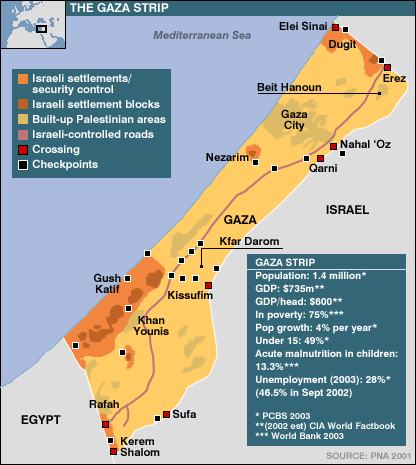
Arial Sharon, also an esteemed general and now Israel’s Prime Minister, won the election heading the Likud party. While in office Sharon, a known hardliner and a security hawk, initiated a plan to remove Israeli settlements and military forces entirely from Gaza city and the areas surrounding it, now referred to as the Gaza Strip. For general Sharon it was cold military calculus – soldiers and civilians keep dying in Gaza, a geographically distinct location that Israel didn’t see as historically or religiously significant. This made Gaza a net liability in the eyes of Sharon and many generals and politicians. Sharon himself was an avid supporter of building settlements but couldn’t justify the cost of staying in Gaza.
The plan was objected to by large swaths of the public as another needless and dangerous forfeit of land. After its execution, Sharon and a third of the Likud members of Knesset split and created a new party – Kadima. So a right-wing general, leading the Likud, a historical right-wing party, gave up land and didn’t get anything in return from the Palestinian Authority. Following the Israeli pullout, Fatah (which ruled the West Bank) was overthrown in a brief Palestinian civil war (2006-7) and the extremist terror organization Hamas took control of Gaza. Since then over 4,000 rockets were fired into Israel from the Hamas-controlled Gaza Strip. Over the next few years, a majority opinion will form in the public – There is no, and there couldn’t be in the foreseeable future, a Palestinian partner for peace, the 2 state solution is dead. This was reflected in right or center-right governments since 2009.
Fears left and right
The left posited the danger of one state for all, a single political entity with equal rights would lead to a Jewish minority in the land of Israel and could spell the end of existence for the Jewish state. The right countered with a concrete security concern, countries rely on defensible borders to ensure their safety and the West Bank grants hostile forces a substantial strategic advantage. In addition, the right argued, the Palestinians aren’t interested in a final peace agreement but rather the implementation of the “Steps plan” – securing more and more territory each time with the final goal being the destruction of Israel and controlling all the land west of the Jordan river.
The emergence of the center
Sharon’s political project, the Kadima party, was the first ever party to lead a coalition that wasn’t the Labor (left) or Likud (right). This creature of convenience was a pragmatic political platform that subscribed to the dangers posed by both camps. Kadima wanted a 2 state solution, not through building trust but by creating Israeli strength and executing unilateral decisions. These 2 states weren’t meant to be equal and Palestinian sovereignty was meant to be limited in military capabilities, less a Palestinian state and more a Palestinian Autonomy.
Security can’t be all… right?
Well, yes and no. Like all countries, Israel is concerned with matters of resource management: monetary policy, education, infrastructure, welfare, and social inequality are all critical. While all of these are matters of quality of life, Benjamin Netanyahu is associated with the term “Life itself”, which means before improving quality of life – Israel must ensure the security of “Life itself”. This term has power in Israel, the only state on earth whose existence is opposed and with the ghost of the Holocaust always looming over it. Israel has carried out airstrikes on nuclear plants in Arab countries, developed world-class missile defense, and defied global powers including the US. Israel is, justly, a paranoid state who’ll always see how others can hurt it and will try to prevent or deter that in any means available.
Voter perspective today: Israeli politics hierarchy
- Existential Military threat:
– Iranian nuclear threat
– Demographic – Jewish minority
– Future war: Palestinian, Arab, or other military threat - The Palestinian Issue:
– Possibility and nature of a future peace
– Unity: Palestinian splintering factions
– Weak PA & Palestinian terror
– Effect on foreign relations - Economics – Cost of living
– Extremely high CPI
– Lack of affordable housing
– Protectionist regulation - The cultural character of the state:
– Status and role of religion in government & public spaces
– A Jewish state or a State for Jews - Democracy – Separation of powers and governance
– Corruption
– Power of the legislative, executive, and judicial branches - Economics – Inequality
– “Equality of burden”: disparity between different groups in providing prosperity for all.
– Level of welfare & taxes
– Resource discrimination
I’ll suggest that this is the hierarchy for many Israelis or at least close to it and seemingly this doesn’t make sense. I’ll further assert that Israelis feel that the most important issue is the existential threats, they proclaim economic or democratic reasons drive their decision, but really they vote on the cultural character of the state. Sounds weird or far-fetched? probably, but I’ll suggest a theory.
Political consensus, Mistrust in politics
During the 90’s, there was an actual debate about establishing an independent Palestinian state, today the issue is decided and even the remnants of the left acknowledge it isn’t possible in the current political climate. In addition, all the factions are in agreement that Israel has to prevent Iran from obtaining a nuclear weapon that’ll disrupt the regional balance of power and will pose an existential threat. That’s the most and second most important issues handled, submerged in political consensus.
Next we’ll tackle cost of living which affects all layers of society and (albeit disproportionally) and the public pressure to lower it is immense, especially in regards to affordable housing with Tel-Aviv being named the most expensive city in the world. The catch here is… well, there is no clear and convincing solution suggested by the parties or even pushed widely in the public. A large part of the public believes that “equality of burden” between communities is the key for economic relief and I’ll get to that. The parties pay lip service and have ideas to try and battle the rising cost of living but other than sectorial parties that promise special budgets to their communities – there is no solution in sight.
Then we get to democratic concerns and economic inequality. First, inequality is fueled in part by the cost of living which is (for now) unsolvable. Secondly, inequality exists in all free market economies and Israeli governments have been subscribing to free market ideology for the last decades. This doesn’t apply to fields that Israel designated to be of national importance, there are strong professional unions, public national healthcare, subsidized education, and strong regulation in defense industries. In that regard, the parties in their suggested solutions but no one suggests radical changes to the system like a massive tax increase or privatizing healthcare or education. Finally, deep mistrust causes voters to highly doubt any reforms will be made once politicians are elected.
Bibi Netanyahu
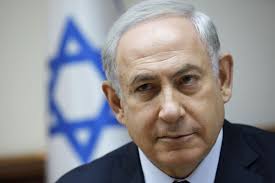
Now democracy, Israel has always been democratic and while judicial activism has been an issue for decades, the latest political issue is the indictment of former Prime Minister Netanyahu on corruption charges. Netanyahu is an unparalleled titan in Israel’s political landscape: brother of heroic commander Yoni who died while rescuing hostages in Uganda, himself a member of the same elite unit, successful finance minister, and longest-serving prime minister. Netanyahu opposed the Oslo accords and resigned from Sharon’s government in protest of the Gaza disengagement. Since 2019, Netanyahu’s criminal cases have been at the center of 3 elections, loomed over a unity government that dissolved after a year, dominated the elections once again, and then caused the creation of an unprecedented ‘Anti-Netanyahu’ coalition. That coalition included right, center, left, Arab and zionist parties, it held for a year but dissolved, so now we’re onto election 5.
Most parties made clear their position on Netanyahu and have either committed to secure a Likud-led government or refuse to form a coalition with, or headed by him. Voters seem tired of discussing this issue and while very few people are open to changing their minds, the need for political stability seems to give politicians public leeway to consider breaking their strict Bibi or Anti-Bibi pledges. So the politicians are trapped in their promises and the public is entrenched in their positions, the elections were about this but some amount of voter exhaustion has set in. A stance on Bibi is a prerequisite when voting on a party, but not the one driving the decision.
Israeli cultural character
Israel was established in the aftermath of the Holocaust and was proclaimed to be a ‘Jewish and democratic” state, this characterization is the major driving force in Israel’s politics since its inception. The clash between being Jewish first and being democratic first is an underlying issue that drives debate, even when not mentioned directly. Israel’s existence is under threat but what state will exist? a fully democratic safe harbor for world Jewry or a country with Jewish institutions enshrined in law?
Fears of ethnic discrimination and religious rule, on one hand, and existential fears of annihilation and loss of heritage on another, Israel is maintaining a tenuous status quo of compromises between its split personalities. Democratic integrity, “equality of burden” and the Palestinian issue are deeply affected by this tension and unsurprisingly parties who side on one side of these issues will often agree on the other issues as well.
Suggested below is an alternate poll which you can fill here: Hebrew Poll | English Poll
Poll
Long term question
1) Israel should be:
- Equally Jewish and democratic
- Jewish First
- Democratic First
- Only Jewish
- Only Democratic
- Neither
Short term question
2) Do you approve of Netanyahu taking part in any future coalition?
- Yes
- No
- Only headed by him
- Yes, as long as he’s not PM
- I don’t care
 Anarchy Guide
Leave a comment